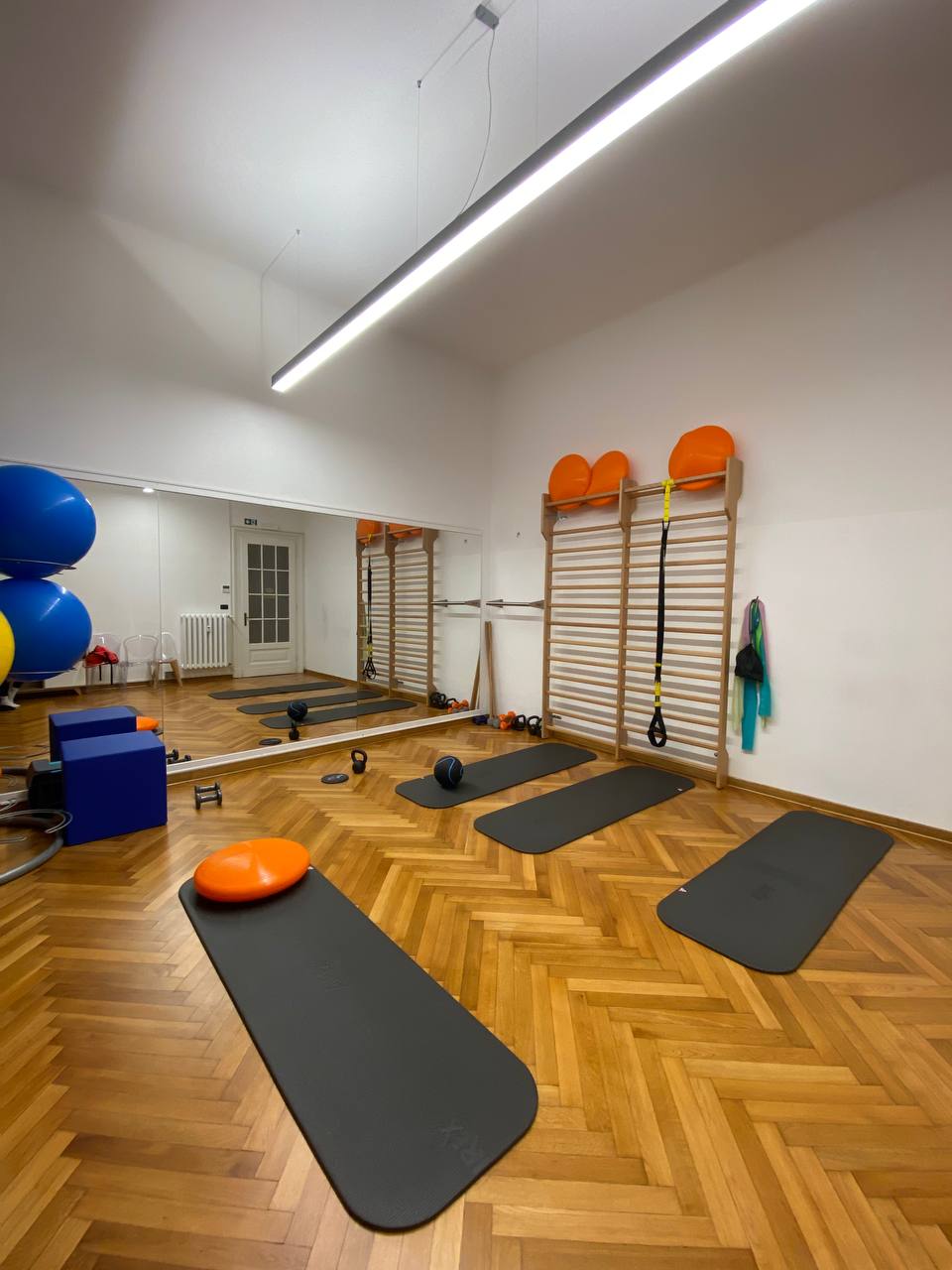
Rehabilitation Gym in Trieste
Rehabilitation and Physiotherapy Gym
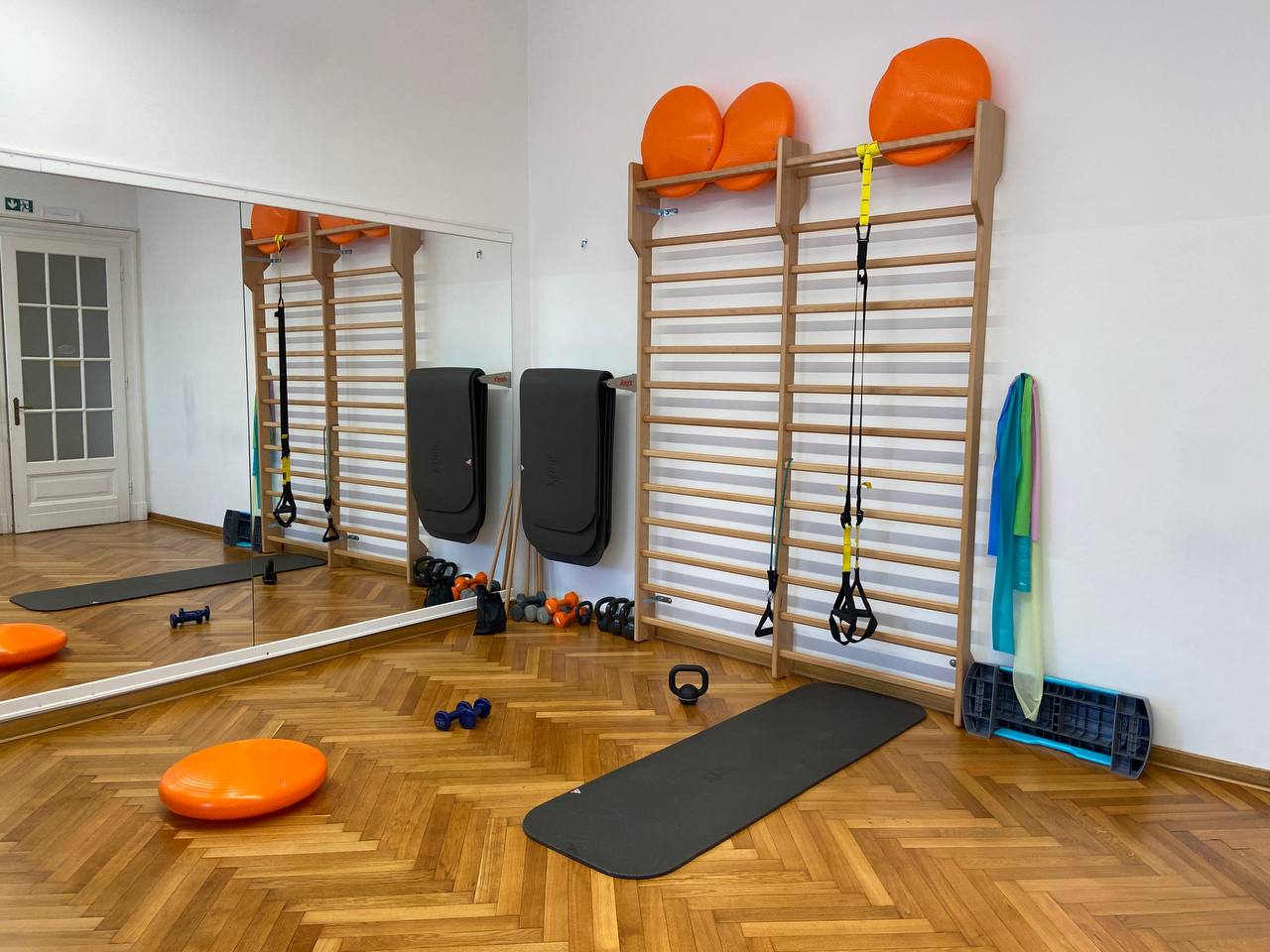
Studio Libra also has a gym and changing room, equipped for rehabilitation, where physiotherapists can work with up to 4–5 people at a time, ensuring that everyone receives the best possible supervision.
Specifically, we organise individual or group postural exercise classes and gentle exercise classes.
The type of exercise offered focuses mainly on correction and stabilisation, both postural and dynamic, using mats, fitballs, resistance bands, small weights, balance boards, etc., and is suitable for all genders and ages.
Studio Libra promotes a holistic approach to health and, thanks to its team of collaborators, also offers other courses designed for the individual’s complete well-being.
Functional Training
Functional training refers to physical activity designed to improve movement in both men and women and to enhance the performance of everyday motor functions. Every day we have to bend down to pick something up from the floor, twist our bodies to reach a bag in the back seat of the car, or quicken our pace so as not to miss the bus. Although we perform these actions daily, we risk injury because we are often not sufficiently prepared for these movements, which at first glance seem harmless.
To this end, during functional training we will learn to use all muscle groups effectively, distributing the load and paying attention to the technique used to perform the exercises. We will focus not only on developing muscle strength, but also on improving joint mobility, balance and coordination. We will learn to perform exercises involving complex movements to improve the connection between the brain and the body. Functional training, by engaging all muscle groups and achieving a good aerobic threshold, helps you achieve a fit and toned body.
Classes are held exclusively in small groups of no more than 6 people to ensure the best possible support during the exercises, respecting the client’s joint physiology, and ensuring fun without causing harm.
Motor, Postural and Psychophysical Re-education through the Alexander Technique
Freeing oneself from harmful physical habits that cause damage, both in terms of posture and expression, is the primary aim of the Alexander Technique, a revolutionary practice developed in the late 19th century that helps one become aware of one’s body on both a physical and mental level, in order to subsequently modify habitual movement patterns.
The Alexander Technique is used to improve one’s movement physiology in everyday life or in situations where one is required to perform sustained and repetitive movements, such as working long hours at a computer, playing a musical instrument or speaking in public.
The Alexander Technique can be practised by people of any age and condition. It is suitable even for children and pregnant women; there are no contraindications of any kind, nor is prior experience required. As it does not involve direct physical correction, it can be practised without any risk, even if there are existing injuries or pain in the body. Improvements begin from the very first lesson, but every lesson in the Alexander Technique is a step towards improving one’s physical and mental habits, because the brain learns and does not revert to old patterns. Regular practice encourages the development of beneficial habits, leading to lasting improvement.